





How to Hang a Navajo Rug on the Wall: A Step-by-Step Guide
After decades of hanging thousands of Navajo rugs in our galleries and in our customers’ homes, we have found that Velcro is the easiest and safest way to hang a Navajo weaving. It supports the rug evenly along its whole top edge, it does not pierce or stress the wool, and it lets you take the rug down, rotate it, or move it whenever you like.
How Velcro holds a Navajo rug
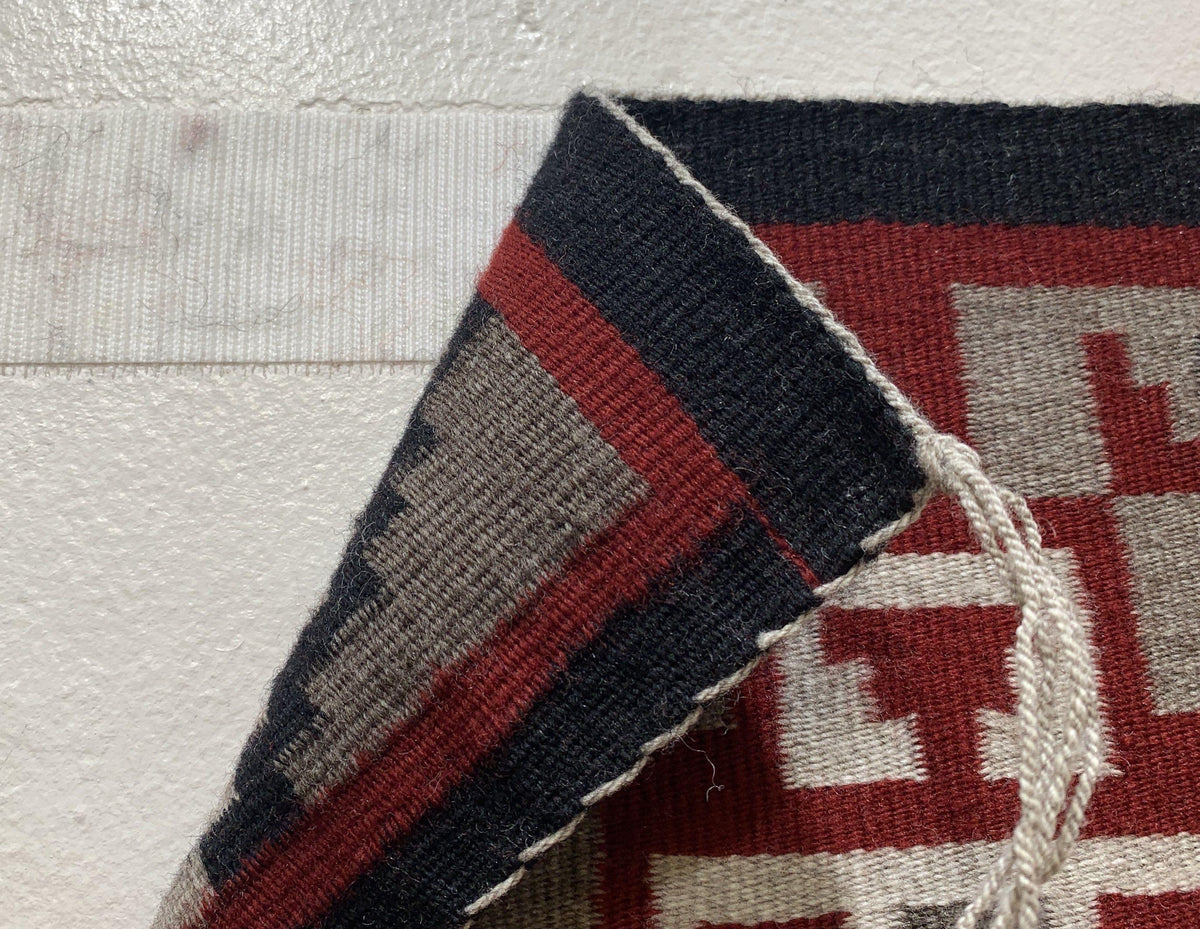
Velcro has two sides: a stiff, scratchy hook side and a soft loop side. To hang a Navajo rug you only need the hook side. The hooks grip the fine fibers of the hand-spun wool on the back of the weaving, so the rug itself acts as the loop side.
Nothing is sewn, glued, or attached to the rug. You mount the hook tape to the wall (or to a wood strip), then press the top edge of the rug against it.
What you’ll need
- 2-inch-wide self-adhesive Velcro hook tape, cut to the width of your rug
- Scissors, a tape measure, and a level
- Optional: a thin wood strip (lattice, a lath, or a wide yardstick) and small finishing nails or two eye hooks and picture wire
Method 1: Velcro directly on the wall
This is the quickest method and works well on smooth, painted walls.
- Mark your line. Decide where the top of the rug should sit and draw a light pencil line with a level (or use painter’s tape).
- Cut the Velcro to the width of the weaving so it supports the top edge from corner to corner.
- Stick it to the wall. Peel off the backing and press the adhesive side firmly along your line. Let the adhesive set for a few hours, or overnight if you can, before hanging a large rug.
- Hang the rug. Starting at one corner, press the top edge of the weaving onto the Velcro and work your way across so it is evenly supported.
- Optional: Use a few short pieces of leftover Velcro under the bottom corners to help the rug lie perfectly flat against the wall.
Keep in mind: adhesive applied directly to a wall can lift paint when it is removed, and it may not hold well on textured walls, brick, or wallpaper. In those cases, use Method 2.
Method 2: Velcro on a wood strip (protects your wall)
Mounting the Velcro on a thin strip of wood keeps adhesive off your wall, works on almost any surface, and makes it easy to move the rug later.
Step 1. Cut the hook tape and the wood strip to the width of your rug, then peel off the adhesive backing.
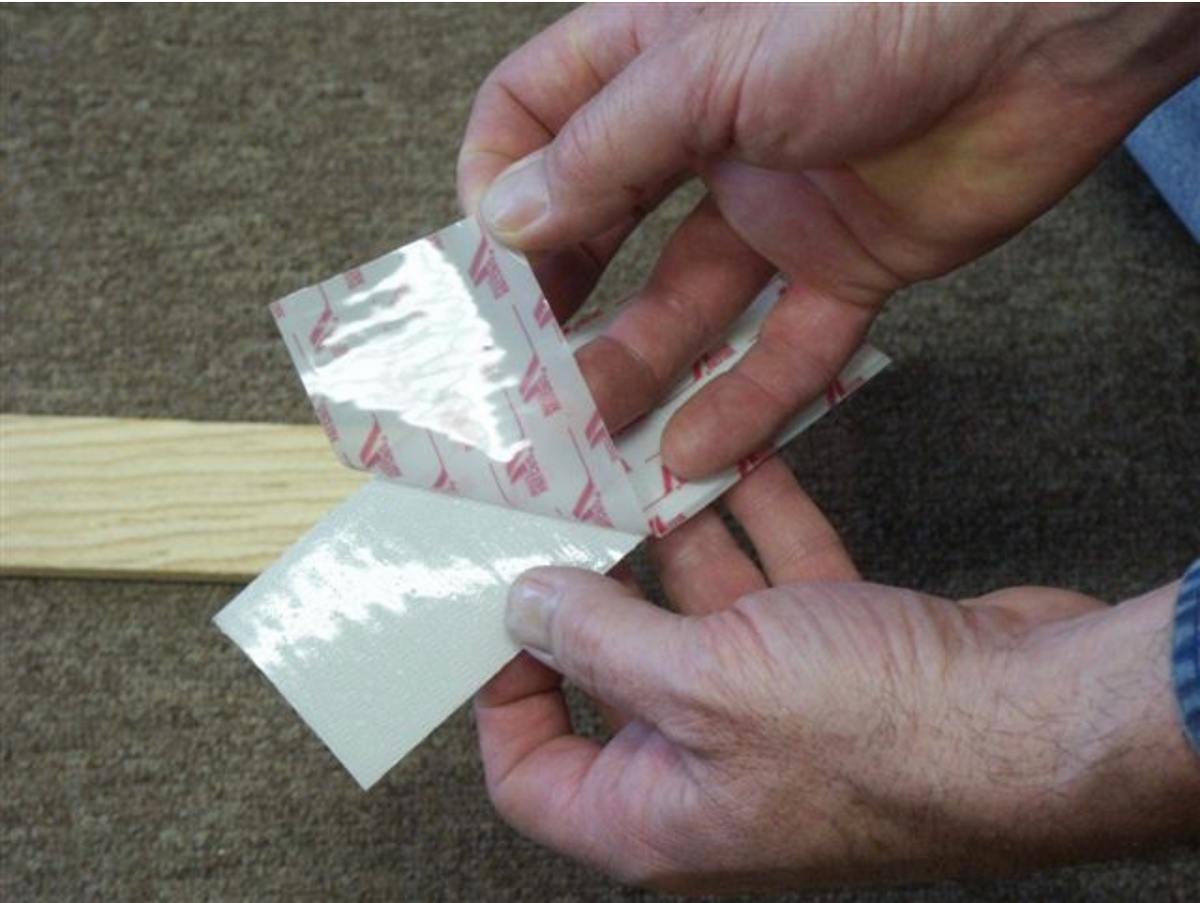
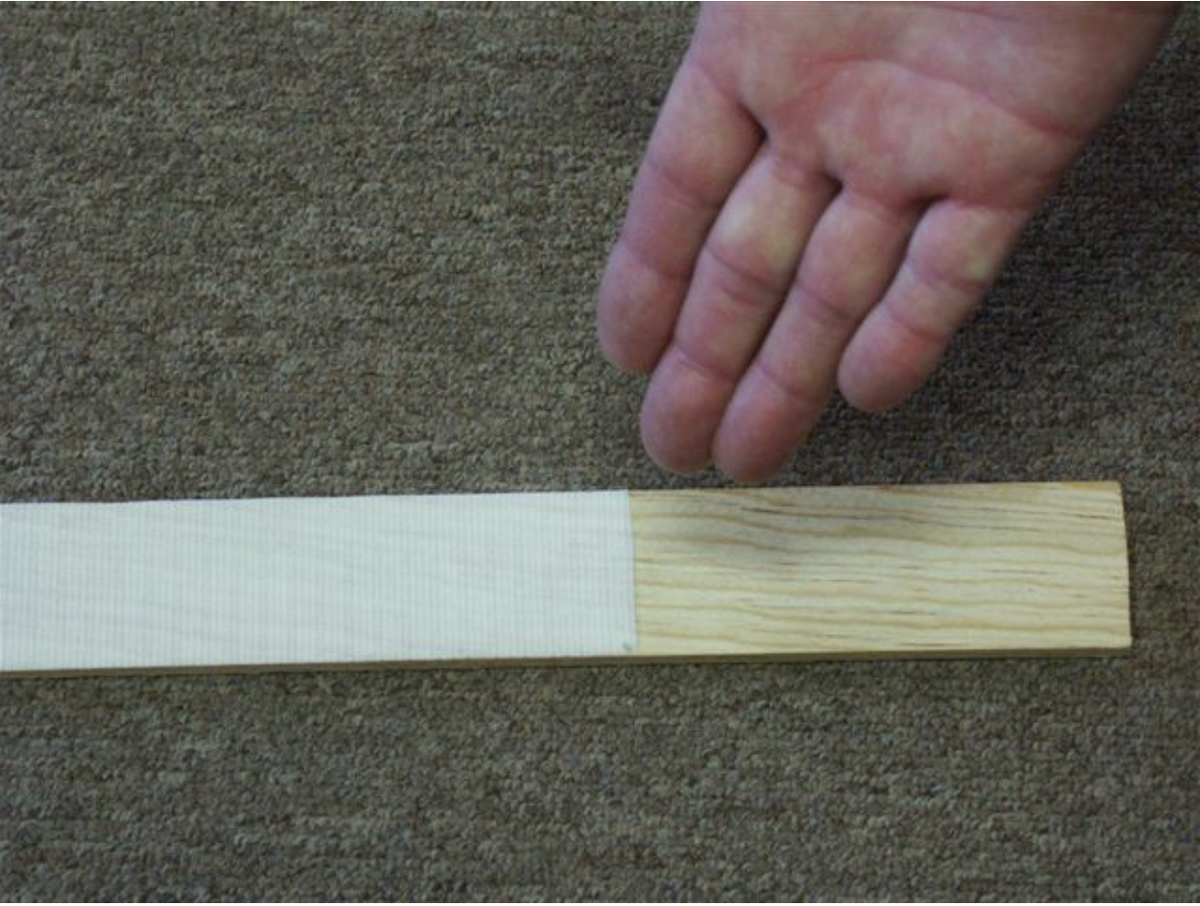
Step 2. Press the Velcro firmly onto the wood strip along its full length.
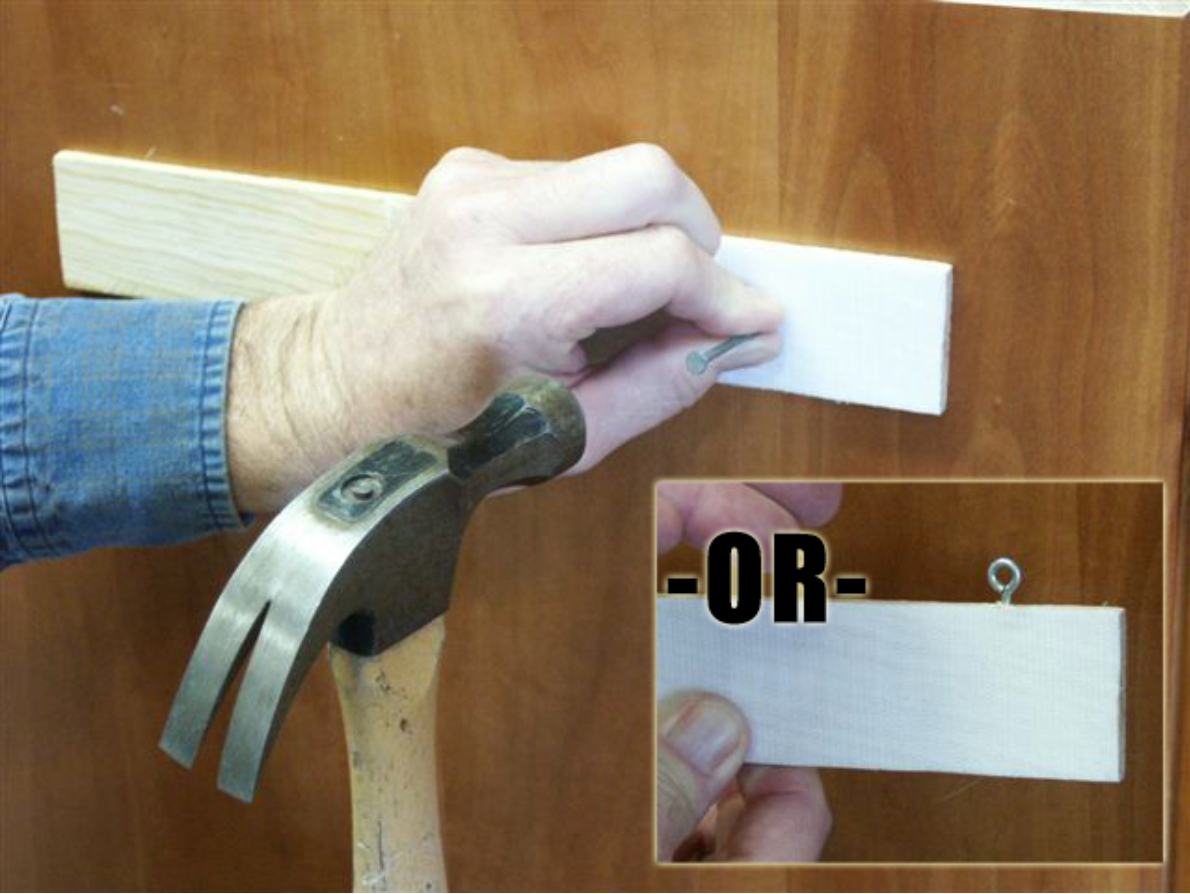
Step 3. Mount the strip level on the wall with small finishing nails, or screw two eye hooks into the top of the strip and hang it from picture wire like a framed piece.
Step 4. Press the top edge of the weaving onto the Velcro from corner to corner. That’s it.
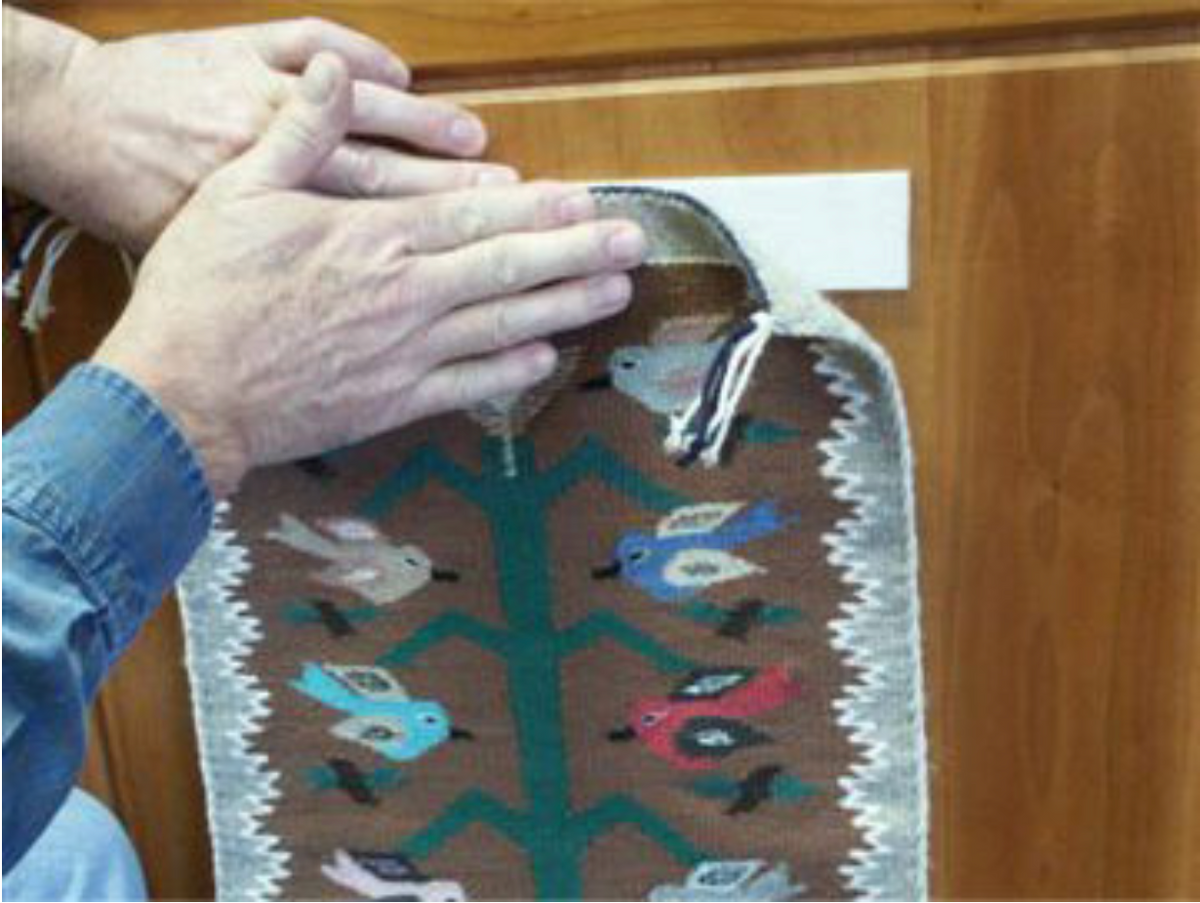
Hanging antique weavings: carpet tack strip
Some older and antique weavings have lost the soft surface fuzz that Velcro grips, and they may not hold. For these, we recommend carpet tack strip, available at any hardware store. It is a thin strip of wood with rows of small, angled tacks that point upward.
- Cut the tack strip to the width of the weaving.
- Nail it level to the wall with the tacks angled up and toward the ceiling.
- Gently work the top edge of the weaving onto the tacks from one corner to the other. The tacks slip between the threads and spread the weight evenly across the full width.
For especially rare or valuable textiles, museums often have a textile conservator hand-stitch a band of cotton twill tape to the back of the top edge, with the soft (loop) side of Velcro sewn to that tape. If you own an important antique piece, contact us and we’re happy to talk through the options.
Where to hang your rug
- Avoid direct sunlight. Sun is the biggest cause of fading, especially for vegetal-dyed rugs. Choose a wall that doesn’t get direct sun, and keep spotlights at a distance.
- Avoid heat and moisture. Keep weavings away from fireplaces, heating vents, and humid rooms such as bathrooms.
- Hang it at eye level. A good rule of thumb is to place the center of the rug about 57 to 60 inches from the floor. Over a sofa or console, leave about 8 to 10 inches between the furniture and the bottom of the rug.
- Hang it the way it was woven. Most Navajo weavings hang best with the warp (the strong foundation threads) running up and down. If you’re not sure which way that is for your rug, just ask us.
- Rotate it once or twice a year. Turning the rug end to end, or flipping it to the other side, keeps any fading even. Navajo rugs are woven with no “wrong” side, so either face can be displayed.
For cleaning, moth prevention, and storage, see our guide to caring for your Navajo rugs.
Using your weaving on the floor
Navajo rugs are durable enough for the floor. On hardwood or tile, always use a good rug pad. We recommend a pad with a non-slip rubber bottom and a felt top, which grips the weaving, keeps it flat, and prevents slipping.
Frequently asked questions
Do I attach anything to the rug itself?
No. Only the hook side of the Velcro is used, and it goes on the wall or wood strip. The rug presses directly onto it.
Which side of the Velcro goes on the wall?
The adhesive back of the hook (scratchy) side goes on the wall or strip, with the hooks facing out toward the rug. You won’t need the soft loop side.
Will Velcro hold a large rug, like a 5×8?
Yes. Velcro supports most large rugs. For very large or heavy weavings, use a double row of Velcro along the top, or mount it on a wood strip fixed into the studs.
Will Velcro damage my rug?
No. The hooks grip the surface fibers without pulling the weave apart. When you take the rug down, peel it away gently, starting at one corner, rather than pulling it off all at once.
My weaving won’t stick to the Velcro. What should I do?
This is common with older weavings that have lost their fuzz. Use carpet tack strip instead, as described above.
What Velcro do you recommend, and can I buy it from you?
We use heavy-duty, 2-inch self-adhesive hook tape. It comes free with any weaving purchased from Garland’s, and we also sell it by the foot. Contact us with the length you need.
Shop Navajo rugs Shop antique weavings


Thank you Garlands for helping us choose the Tree of Life Weaving by Bruce Nez.
We successfully and easily hung the very beautiful work using the Velcro directly on the wall.
@Kristin DeKuiper – We sell 2" wide self-adhesive velcro by the foot. Feel free to contact us and we can ship however much velcro you need. If your velcro strip is detaching from the wooden hanger, you can use super glue to reattach the back of the velcro strip to the wood hanger. Happy to answer any other questions you have!
I have used your method for a Navajo rug. After a couple of years, the velcro strip started detaching from the wooden hanger. I purchased some industrial strength velcro to replace it, but the grip side of the velcro is not as “grippy” as the one that originally came with the hanging board, and doesn’t hold the rug. The grip side does not stick out as much. Can you recommend the best way to get a grippier velcro strip? Thank you.
@Steve N. Since Navajo rugs are wool, the weaving itself acts as the fuzzy side of the velcro. The velcro we provide is only the side with the hooks, there’s no need for the fuzzy side. The weaving sticks directly to the velcro itself. We recommend flipping your weaving once or twice a year and hanging a weaving with velcro makes this extremely easy to do.
The velcro is self-adhesive, so the backside has a plastic that peels off and the velcro can be stuck directly to your wall or to a wood strip for hanging.
This is confusing. Do you attach anything to the rug itself? Velcro has 2 sides. How does the rug attach to the Velcro?
Leave a comment